

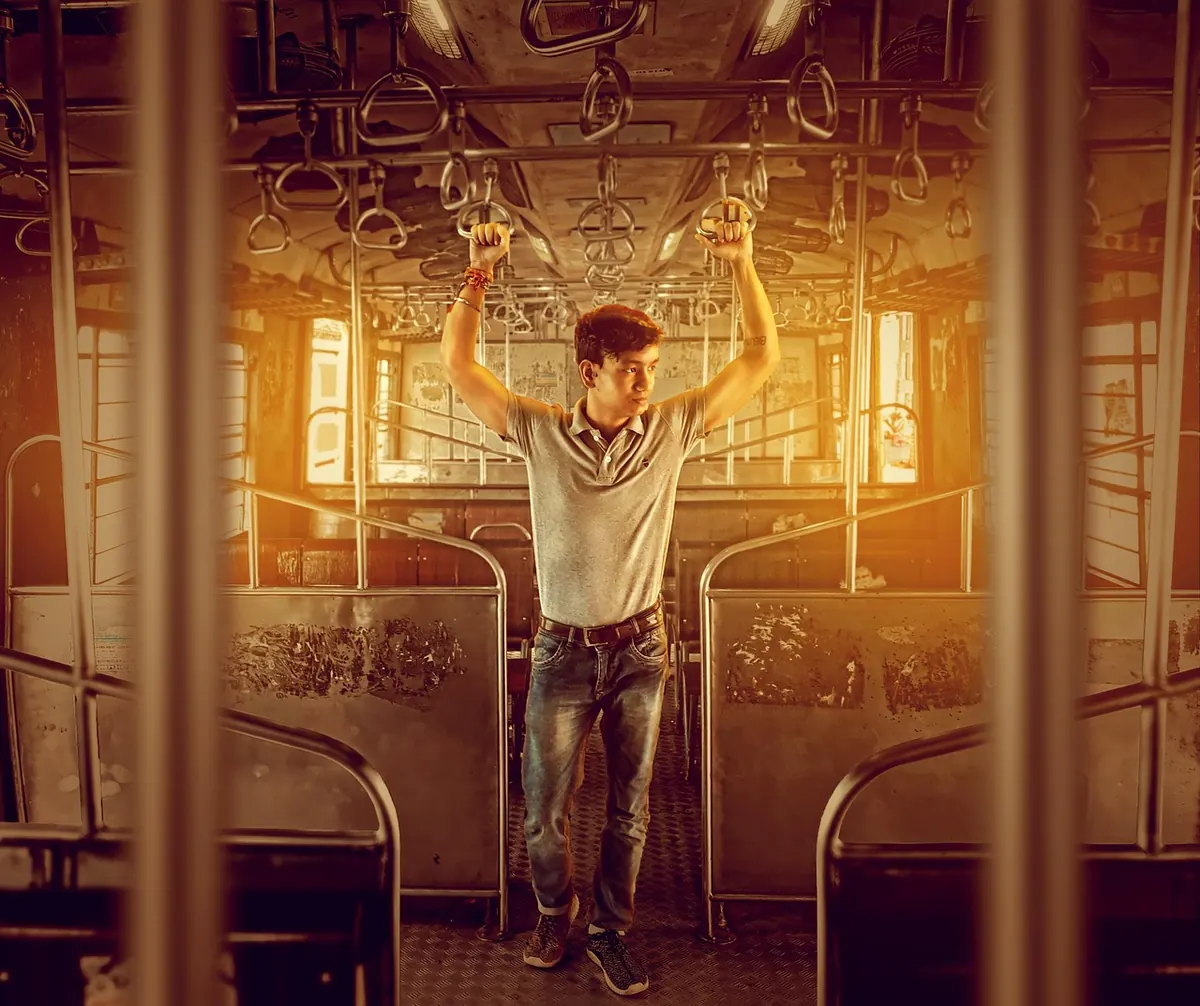



Ask anyone who commutes into a British city what aches by Friday afternoon and the lower back is usually somewhere near the top of the list. A delay at Clapham Junction, a crush on the Northern line, forty minutes standing with a rucksack slung over one shoulder — none of it looks dramatic, and that is precisely the problem. Small, repeated loads add up quietly. The encouraging part is that most of it is manageable with a few adjustments you can make on the platform, in the carriage and on the stairs.
Why the commute is hard on your lower back
Your spine tolerates a great deal of load, provided the load keeps changing and you keep shifting position. A commute does the opposite. It locks you into one shape for long stretches: hips flexed in a train seat, weight parked on one leg on a crowded platform, a laptop bag pulling one shoulder down towards the floor. Muscles that should be sharing the work go quiet, and the tissues left holding the position get tired and sore. Add a sudden jolt with a heavy bag in your hand and you have the recipe for the twinge that arrives on Tuesday and is still there on Friday.
Standing on a packed Tube or bus
Standing is not automatically bad for you. It is the way many of us stand that causes trouble: locked knees, weight parked on one hip with the pelvis hiked upwards, and a white-knuckle grip on a handrail above head height.
- Set your feet roughly hip-width apart, or use a slightly staggered stance when the carriage is swaying.
- Keep your knees soft rather than locked, and carry your weight through the whole foot, not the outer edge.
- Grip the rail or strap at about hip or chest height where you can, instead of reaching overhead.
- Change something every few minutes — shift your weight, adjust your grip, take a small step.
- Let your knees absorb the jolt when the train brakes, rather than bracing through your back.
Avoid resting all your weight on one leg with the opposite hip dropped for any length of time. That position holds your lower back in a gentle side-bend, and the muscles on one side end up doing far more than their share. If the train is packed and you cannot move much, at least keep your pelvis level and your ribs stacked over your hips rather than letting your tummy sag forwards.
Sitting: making the most of a commuter seat
Train and bus seats are designed to fit as many people as possible, not to support your spine. You still have choices.
Sit back. Slide your bottom towards the back of the seat so the backrest actually touches your lower back, rather than perching on the front edge with nothing behind you. If the seat is too high and your feet dangle, put your bag or folded coat under your feet so they rest flat and your knees sit level with, or slightly below, your hips. A small recline is usually kinder to the lower back than sitting bolt upright.
Try not to cross your legs for the whole journey — a few minutes is fine, an hour is not. And if you are reading, hold the phone or book up rather than dropping your head towards it. Thirty minutes of chin-to-chest posture loads the neck and upper back as well as the lower back, and it is one of the easiest habits to change. On longer journeys, stand up once and walk to the end of the carriage.
Bags, rucksacks and the one-shoulder habit
A bag carried low and away from your body behaves like a lever. The further it hangs from your spine, the harder your back muscles have to work to keep you upright. A crossbody bag worn with the strap across your chest, the bag resting on the opposite hip, is easier on the back than one dangling from a single shoulder. A rucksack worn on both shoulders, with the straps adjusted so it sits close and reasonably high, spreads the load best of all.
Swapping shoulders is a sensible habit, but the better fix is carrying less. Leave the charger at your desk, use a locker if you have one, and reorganise what you carry so the heaviest items sit closest to your back. If your rucksack has a waist or chest strap, use it — that is what it is there for.
Lifting luggage without regret
Stairs, racks and overhead bins are where commuter backs get caught out. A few seconds of planning saves weeks of discomfort.
- Look at the load and decide where it is going before you grip it.
- Get close and square up: feet hip-width, one foot slightly forward, facing the case or bag.
- Bend at the hips and knees rather than folding at the waist, and keep your back in its natural curve.
- Hold the load close to your body, breathe out as you stand, and let your legs do the work.
- Avoid twisting. Turn your whole body with your feet, especially when swinging a case onto a rack.
- Ask for help if it is heavy or awkward. Someone on the platform will usually say yes.
On station stairs, use the handrail and take one step at a time rather than dragging a wheeled case behind you at an angle. On escalators, place the case on the step in front of you and stand tall, rather than leaning back to haul it. If a bag has to go overhead, lift it to chest height first and then push it into place; hoisting it straight from the floor is the movement most likely to catch you out.
A two-minute reset before you reach the office
Before you sit down at a desk for the rest of the day, give your spine a chance to change position. Roll your shoulders back a few times, stand tall and gently squeeze your shoulder blades together, then take a slow walk — even getting off a stop early counts. If you have a spare minute on a quiet platform, a gentle hip flexor stretch helps undo the effects of a long seated journey: step one foot back, tuck your pelvis slightly under, and hold for a few breaths. Stop any movement that causes pain.
When to get your back checked
Most commuter aches settle within a couple of weeks with gentle movement and better habits. Seek advice from a GP, physiotherapist or pharmacist if pain is severe, keeps getting worse, or radiates below the knee. Get urgent medical help if you notice numbness or weakness in a leg, numbness around the groin or saddle area, or any change in bladder or bowel control. This article offers general guidance only and is no substitute for advice about your own back.
Photo: lokeshjb1996 / Pixabay